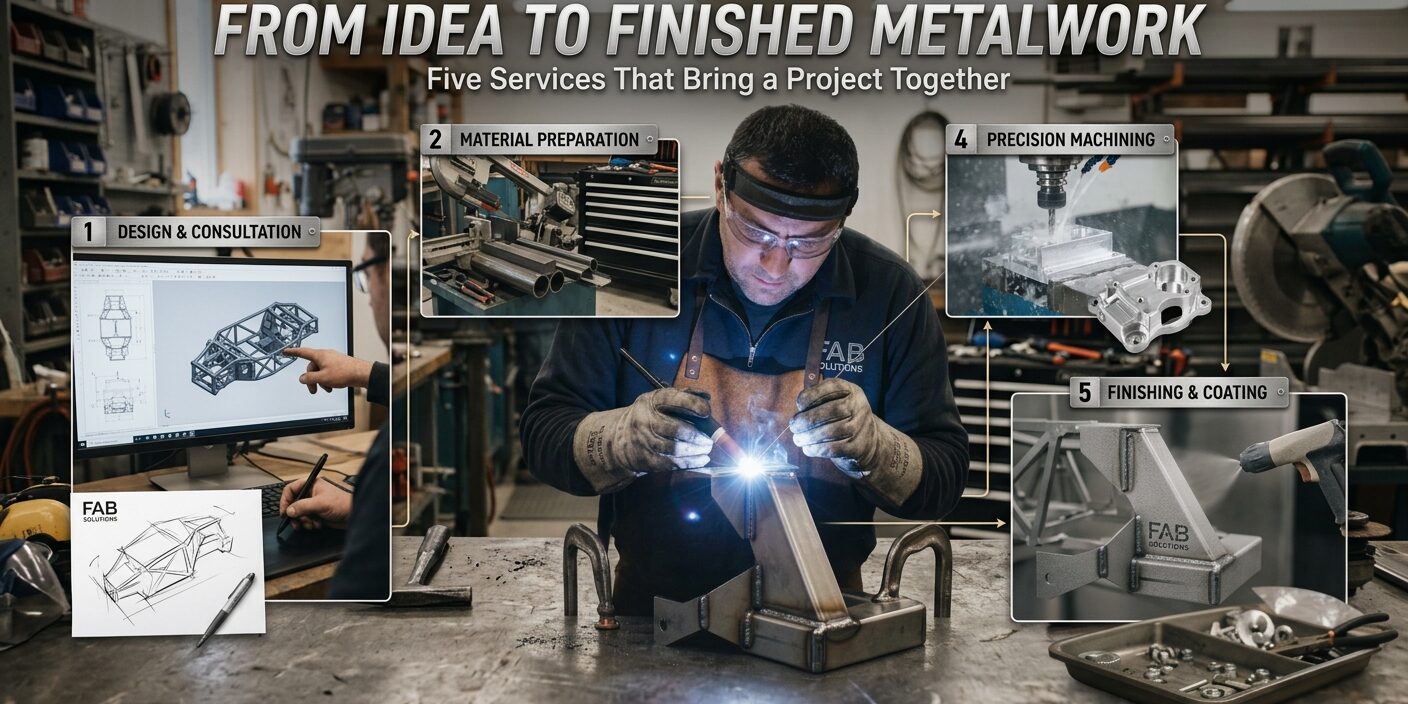
A metal project can begin with a sketch on paper, a set of measurements or a photo of something you would like to make your own. The next question is how to turn that idea into a finished piece that suits its purpose.
You do not have to arrive with every technical detail worked out. It helps to understand the main stages a project might involve, but the starting point is simply explaining what you need. Here are five services 3D Metal Workx offers in Johannesburg—and how they can help bring an idea together.
1. Custom fabrication: make it fit the brief
Custom fabrication is about creating a metal solution around a particular requirement rather than choosing something off the shelf. The dimensions, function and appearance of the piece all shape the plan. The 3D Metal Workx portfolio includes furniture, display units, staircases and balustrades, showing how different briefs can lead to very different results.
If you have an idea but are unsure how it could be made, start with a sketch, reference photo or description of the space where it will go. That gives the team something concrete to discuss with you.
2. Welding: bring the components together
Many finished items begin as separate parts. Welding joins those components into an assembly. 3D Metal Workx lists MIG, TIG and spot welding among its capabilities, with the appropriate method depending on the materials, the joint and the intended use.
When discussing a welding project, tell the team whether the piece is mainly functional, visible as part of a finished design, or both. Details like where it will be used and what it needs to support help inform the conversation about the work required.
3. Laser welding: another way to join metal
Laser welding is another joining option at 3D Metal Workx. It uses focused laser energy to join metal parts, and may be worth discussing when a project calls for controlled, detailed work. The appropriate welding method depends on the material, joint and finished application; the team can advise once they have reviewed your requirements. Share a drawing or photo, along with the dimensions and intended use, when you enquire about laser welding.
4. Tube and plate rolling: create the curve
Not every project is built from straight lines. Tube and plate rolling forms metal into curved sections. Curved tube can be used in a handrail, while rolled plate may be part of an architectural feature or another formed component.
A drawing, template or clear reference image is particularly useful here. It helps communicate the shape you have in mind, along with the dimensions and intended use, so the team can discuss the approach with you.
5. Sheet-metal bending: form the angles
Sometimes a flat sheet needs one or more defined angles to become the component a project calls for. Sheet-metal bending helps create that form. It might be one stage in a larger custom job or the main requirement for an individual part.
If you have a drawing, include the dimensions and show where each bend belongs. If you are still working out the design, share a photo or sketch and explain how the finished piece needs to fit. Contact the team about bending.
Which service should you ask for?
If you want a complete item made to your brief, begin with custom fabrication. If the project involves joining metal parts, ask about welding or laser welding; the team can advise which method suits the job. For a curved shape, discuss tube or plate rolling. For a formed sheet-metal component, ask about bending. Your job may involve more than one of these services; you do not need to decide the whole process before getting in touch.
The most useful first enquiry includes a sketch or reference image, approximate measurements, the number of pieces and what the finished item needs to do. Mention your preferred material if you have one. If you do not know all the answers yet, that is fine start with the idea.
Ready to discuss a project? Contact 3D Metal Workx in Sebenza, Johannesburg, email dario@3dmetalworkx.co.za, or call Dario on +27 82 707 8746.


